Clear answers on system types, battery upkeep, net metering steps, and PM Surya Ghar eligibility rules, so you can plan your installation with accurate expectations.
Each system type serves a different need. Here is how on-grid, hybrid, and battery-backed setups differ in daily operation and upkeep.
On-grid vs hybrid systems
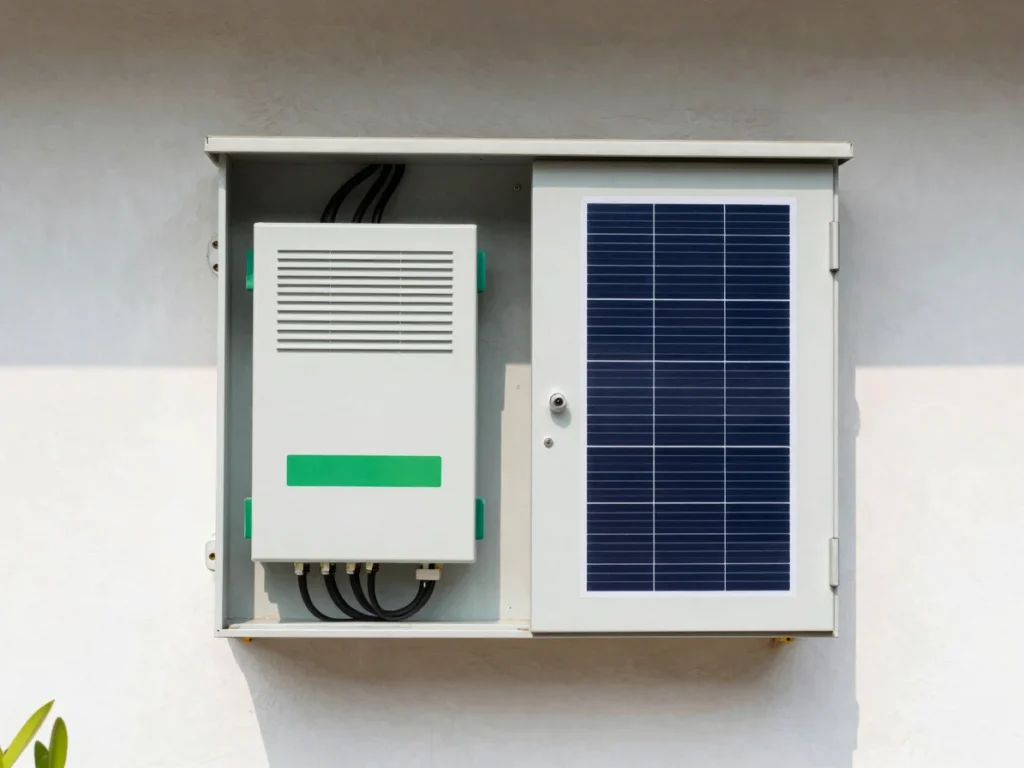
An on-grid system exports surplus power to the grid and draws from it when solar output falls short. A hybrid system adds battery storage, so it can use stored energy during outages, subject to the chosen design.
How long batteries last
Battery life depends on chemistry, depth of discharge, temperature, and charging habits. Your installer should state the expected service life and warranty terms for the specific battery offered before you commit.
Routine maintenance steps
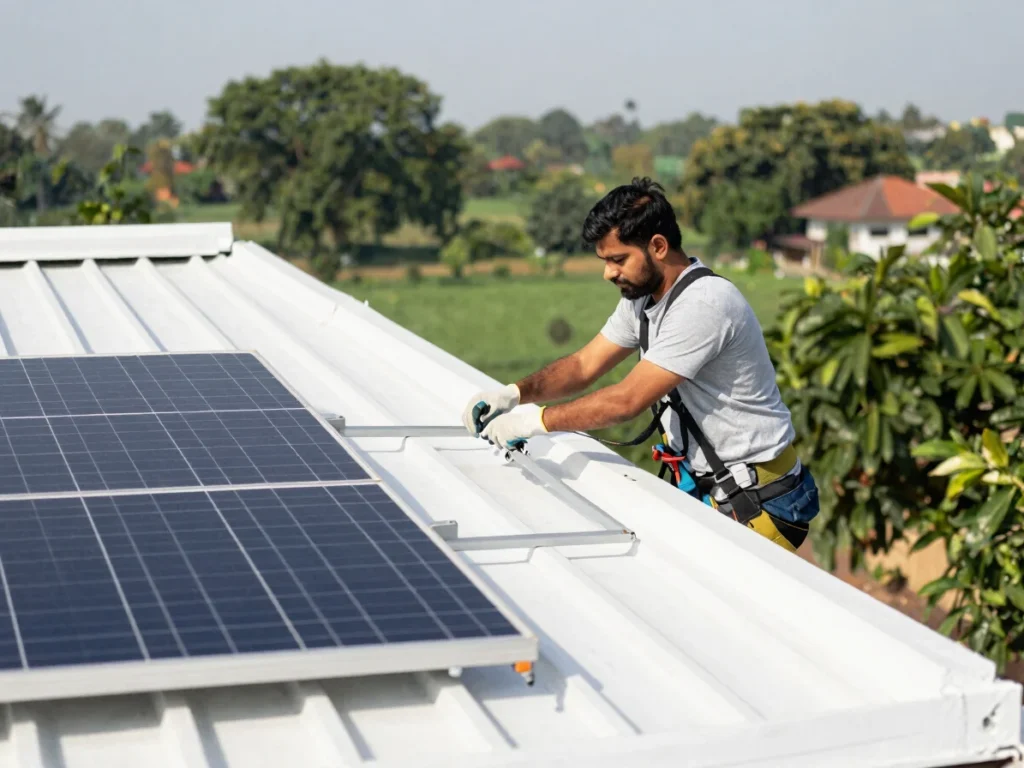
Clean panels periodically, especially after dust storms or in the dry season. Inspect earthing connections and cable joints at regular intervals, and have a qualified technician check inverters and battery systems.
Approvals and subsidies
Net Metering and PM Surya Ghar Rules
Net metering in Uttar Pradesh
The approval process through your DISCOM
Net metering requires an application to your distribution company, a technical feasibility review, and inspection before the system is connected. Timelines depend on the utility, so we help prepare complete documentation to avoid avoidable delays.
Rooftop space needs
How much roof area you need
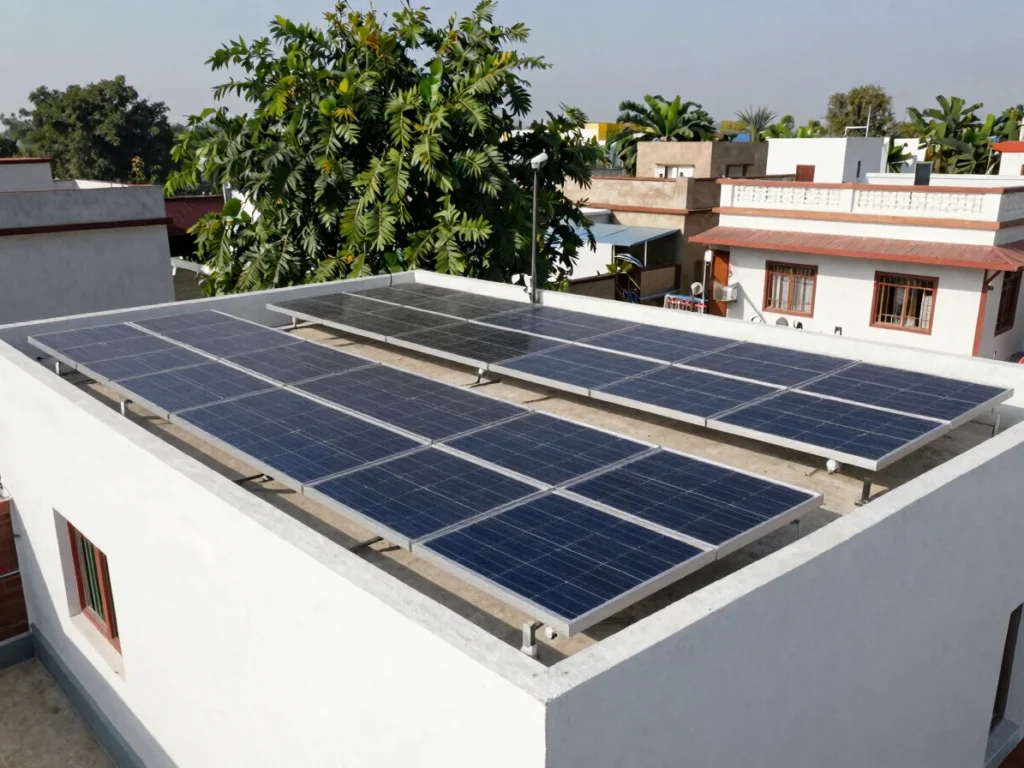
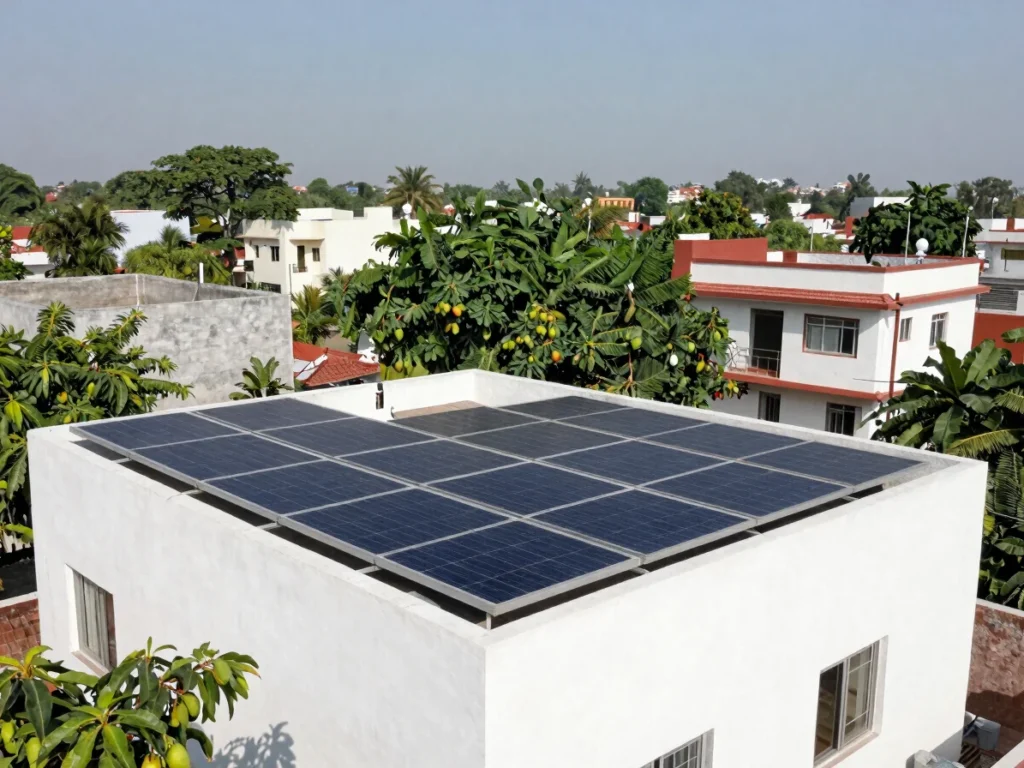
Roof area required depends on the system capacity you choose, panel efficiency, shading, and the structure's load capacity. A site survey confirms whether your roof suits the planned capacity and mounting method.
PM Surya Ghar eligibility
Subsidies follow applicable rules
Eligible residential consumers may receive government subsidies under the PM Surya Ghar scheme, as defined by applicable rules and the national portal. Eligibility and disbursement depend on those rules, and we do not guarantee approval or a specific subsidy amount.